The Memoir · chapter 11 of 42
Friends and the Years of Fear
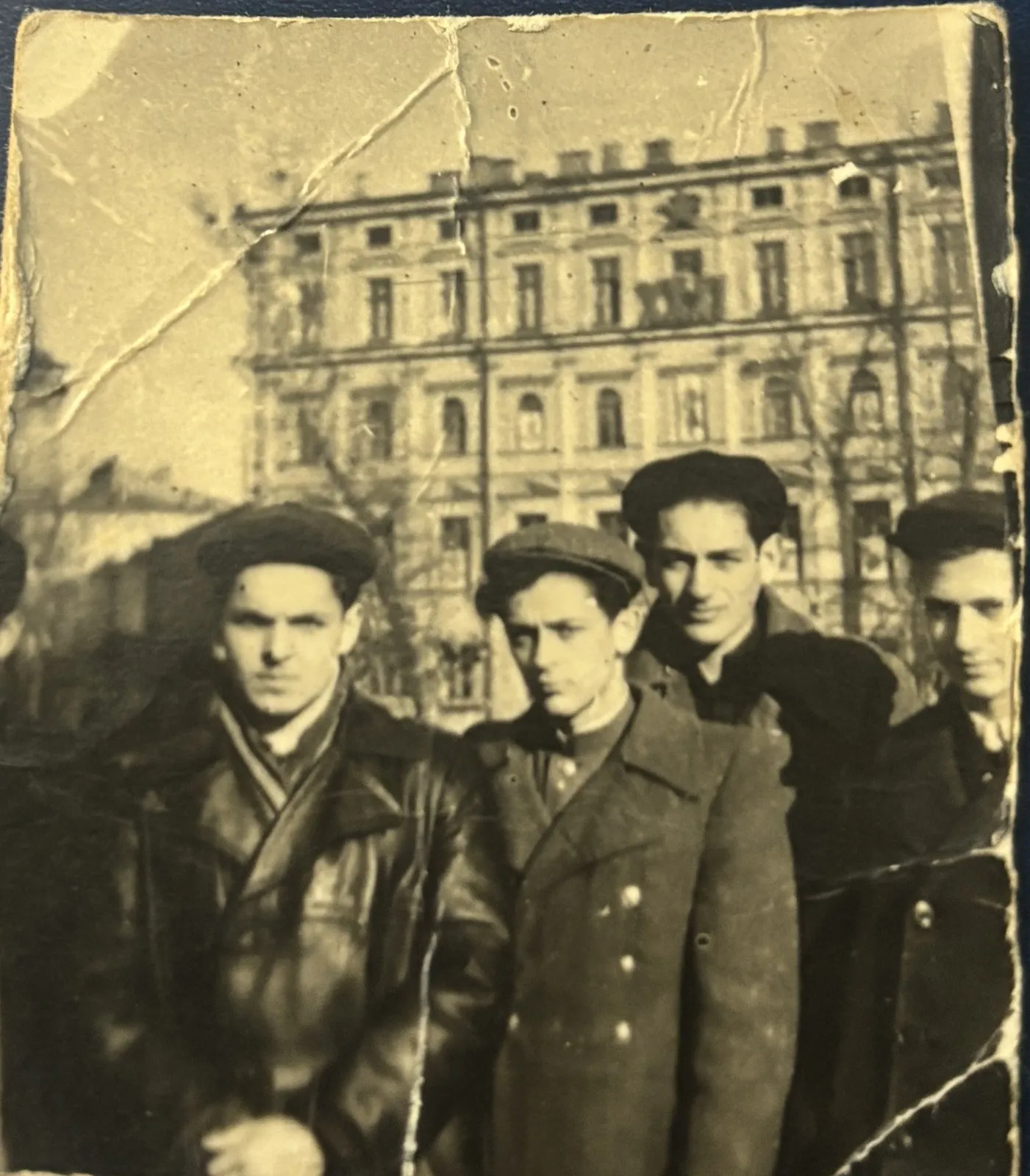
In the group there were able fellows, but the especially talented one was Volodya Yasnopolsky. This man was greatly gifted by nature, had an extraordinary memory and capacity for work, and with all that was modest to the point of indecency. As a result he became an ordinary PhD in the field of automating the work of bucket excavators at one of the research institutes, though we had all seen him in the future as nothing less than an academician. But, alas, besides a head, one must also possess a polite insolence.
I had a big and faithful friend, Yura Shmal. His father, a proletarian intellectual, a physician with a PhD, was dean of the sanitary-hygiene faculty of the Kyiv medical institute. Yura’s fate turned out a very tangled one. During the war he and his mother were being transported by the Germans to Germany (his mother was a doctor). At one of the stations the mother was taken off the train, and Yura went on alone. He got off the train in Czechoslovakia and began searching for his mother. After long wanderings he came into the family of a certain Czech, who kept him as a son. When our forces came into Czechoslovakia, Yura wrote a letter to Kyiv, to his father’s prewar place of work, and colleagues from Kyiv wrote to his father at the front (he was the head of a field hospital), telling him where his son Yuri was. And it turned out that they were near each other. The father found his son and took him, with thanks to the Czech. By that time the father was married to a nurse, Klava, and they were expecting a child. Years passed, and a delegation of doctors from Ukraine, sometime around 1964, was at a scientific conference in New York. There a woman doctor from Kyiv, living in New York, approached them and asked whether they happened to know, back in Kyiv, a physician named Dmitry Denisovich Shmal. “Of course we know him, he’s the dean of the faculty.” “Then he is my husband.” They told her about Yura, gave her the address, and that was how Yura found his mother. He went to see her in New York twice. He brought back gifts from her for the family and the children. At the time his father, naturally, felt distinctly uncomfortable, a dean, and details like these! But his former wife proved to be a person of nobility, and the whole thing was quietly let go. Yura, for his part, defended his dissertation; he had designed an intricate mechanism for extracting rock, which during installation damaged an expensive conveyor belt. By the account that survives, Yura, in the city of Aleksandriya , took the reproaches of the installation crew over the failed design very hard, and hanged himself in the plantings outside the town. His two married daughters, his wife, his friends, among them myself, and his colleagues buried him in a zinc coffin in Kyiv, at Baikove cemetery.
I was also friends with Volodya Shamis, a student of the law faculty of Kyiv State University. A very clever fellow, an excellent student, but an incorrigible womanizer and carouser. His father was an old Bolshevik who had held high posts in his day. His mother had worked as a secretary to P. P. Postyshev65 Postyshev, Pavel (1887–1939) A senior Bolshevik who, as Stalin’s envoy, effectively ran Soviet Ukraine in the early 1930s and bore much responsibility for the policies that brought on the famine of 1932–33. He was himself arrested and shot during the Terror. That Volodya Shamis’s mother had worked as his secretary placed the family close to the summit of Ukrainian power, and, in those years, close to its dangers. Note 65 · all notes and used to tell a great deal about that man. Volodya later became a well-known lawyer in Kyiv, had a solid clientele, and earned well.
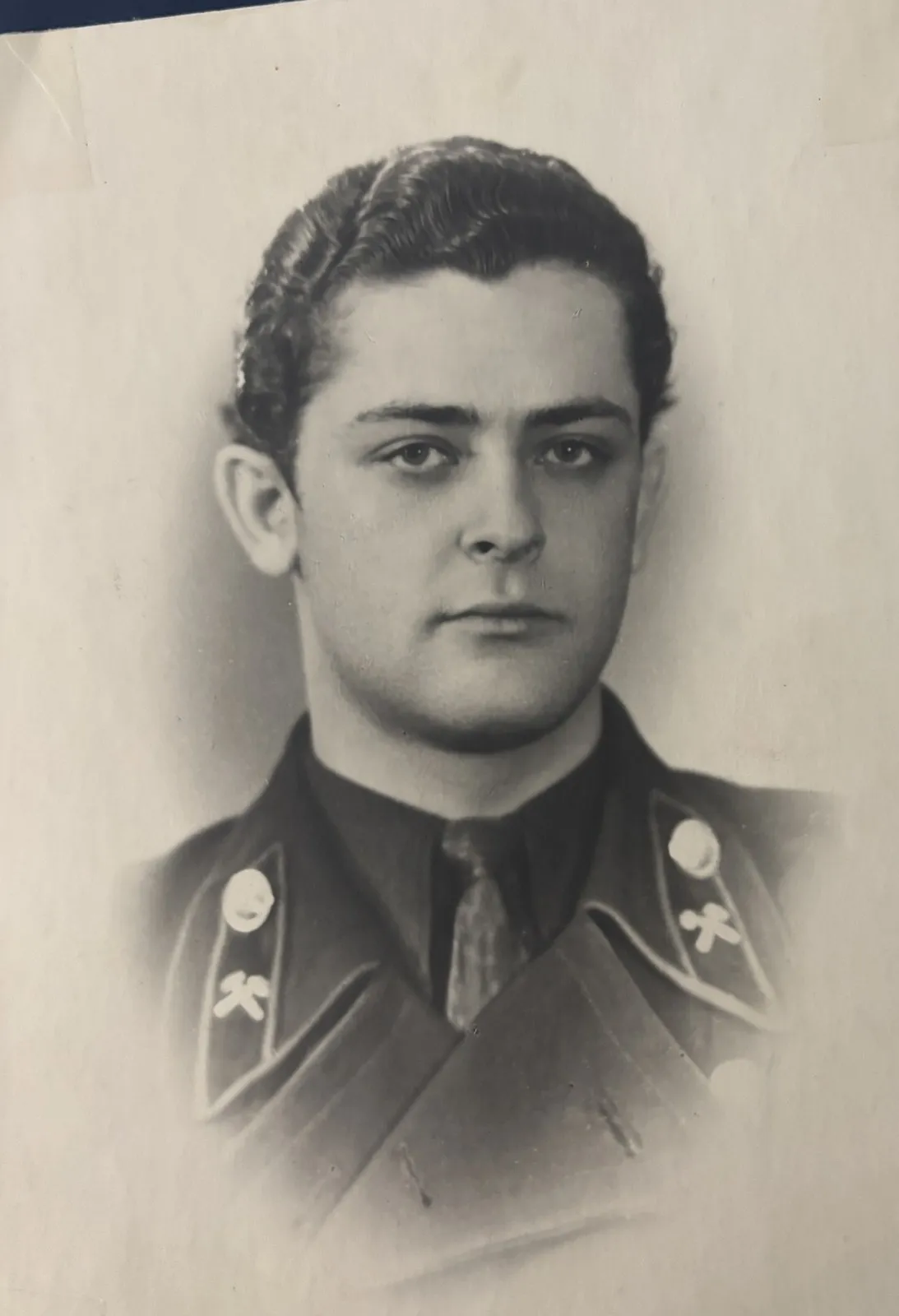
At that time, on an evening in February 1953, the doorbell rang in our apartment. I opened the door. I saw a young man in a handsome pyzhik66 Pyzhik A hat made of the soft fur of a reindeer calf, warm and costly. In the Soviet era it was a recognized mark of officialdom and status, which is why the author notes it on the young man who came to summon him, identifying him at a glance as someone from the apparatus. Note 66 · all notes fur hat. He asked: “Volodya?” “Yes.” “May I come in?” The man who entered produced the identification of a KGB67 KGB The Soviet Union’s main security and intelligence agency, the latest in the line that ran from the Cheka through the OGPU and NKVD. To be summoned and questioned by it, especially as a young Jewish man during the doctors’ plot, was genuinely dangerous, which is why the author stresses how carefully he had to “slip out of the snare.” Note 67 · all notes officer and asked me to come along with him. “You are expected there, they want to talk with you.” I got ready and went with him. There, in the building of the republican committee, he led me into an office where two women sat at desks, and there was a desk for my escort. I took off my outdoor things, my uniform greatcoat and my cap with its cockade. A short captain named Zaytsev appeared. “Come along, Comrade Litvak.” To my question as to why I had been invited, he answered that it was certainly not for a dance. We set off: he ahead, I behind him. We began to descend the staircase, down into the basement premises. Into my mind floated the phrase “the cellars of the Central Committee.” The thought ran through me: “If they start to torture me, I will shout: ‘Long live Stalin!’” We went into an office with a large desk and a small side table. I was invited to sit and to place my hands on the table, which of course had its intended effect on my state of mind. He began by saying that I was, evidently, aware that our press was seriously ridiculing and criticizing Jews. I parried at once that this was, evidently, a little error, since the press was criticizing not Jews but scoundrels, among whom there were also Jews, as well as other nationalities. And I stressed that I understood the question only in this way, and that if I was wrong, let them correct me. He grew flustered, reddened, and turned to the concrete matter. They knew, he said, that we young Jewish fellows met of evenings and carried on conversations expressing dissatisfaction with the antisemitism of the press, criticizing the policy of the Party in this connection; that I, supposedly, did not agree with the opinion of my friends and stood on Party positions, while others did not stand on such positions, and that I ought to tell them who said what, and when. Everything became clear to me, and I decided, at my own risk, to teach him a lesson. I held out for a long time, balked, and at last “broke.” With great reluctance, casting down my eyes, I confessed that mostly we talked about… women. This infuriated him; he began to threaten that I had better recall it all, because afterward it would be too late. And again I answered that the only thing I could do was to listen more closely in the future and then report to them. That suited him. He asked me to memorize his telephone number, and when the wish came over me, to call and arrange a meeting, and that he would be waiting for the call within the next month. I understood that they had nothing on us, that they were trying to build a “case” out of thin air. It became clear, too, that they did not intend to drag testimony out of me by torture. Clearly, had they jailed me and begun methodically to squeeze, I would have said anything they wanted. But for now I returned home after midnight, toward two o’clock, and was happy to be free.
And further, events unfolded thus: the “great Stalin,” thank God, died two or three weeks later, the doctors were released68 The “doctors’ plot” A fabricated conspiracy announced in early 1953, accusing a group of mostly Jewish Kremlin doctors of plotting to murder Soviet leaders. It set off a wave of official antisemitism and fear of mass deportations of Jews. The whole affair collapsed when Stalin died in March 1953, as the author describes. Note 68 · all notes , and I was left in peace.
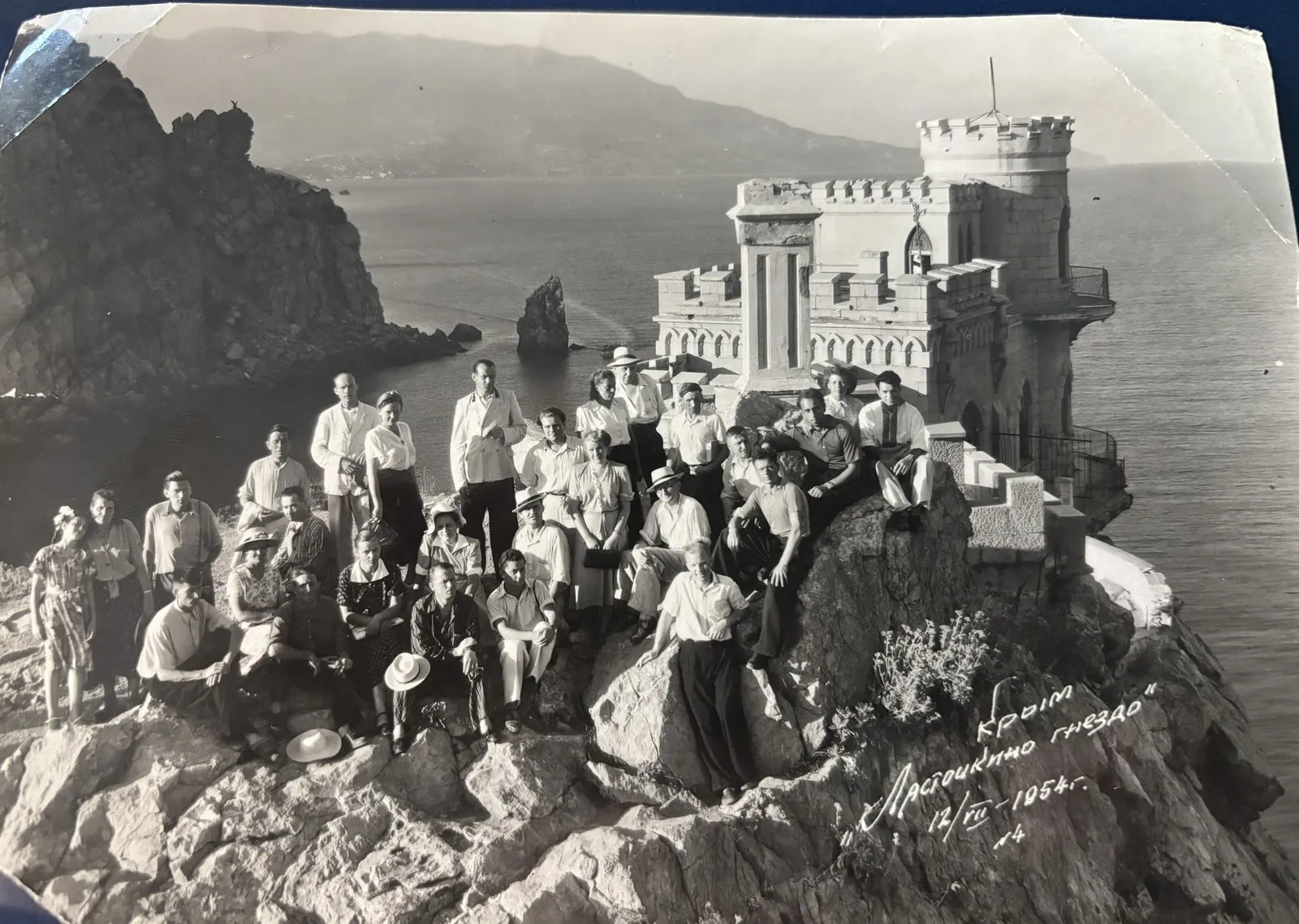
There remain in my memory the days spent on production practice. The first time was together with Zhenya Doronin and Ioan Kïmpeanu (a student from Romania), at mine 17-17 Bis, named for the Papanin men, in the “Stalinugol” trust, we worked as electrical fitters on the heading section and earned the qualification of mine electrical fitter, 4th class. The second time, at mine no. 21 of the “Snezhnoantratsit” trust, we worked as a foursome, Yura Shmal, Volodya Yasnopolsky, Maria Chekhova, and I. We worked in dead earnest for two months and earned well. The third time, the practice came after the fourth year, at the mine named for the OGPU43 OGPU The Soviet secret police of the 1920s and early 1930s, the successor to the Cheka and the forerunner of the NKVD and KGB. As a private trader, grandfather was inevitably under its scrutiny. Note 43 · all notes , of the “Rostovugol” combine. The program called for the mine workshops. I studied all the processes in the workshops in detail and wrote a solid report, which a good many of my classmates copied. Besides that, I conducted safety-engineering classes with examinations for the miners of the capital-works section (with hourly pay). My pre-diploma practice I did at the K. Marx mine of the “Ordzhonikidzeugol” trust ( Yenakievo ). There an original hoisting installation was in operation, with a motor-generator system and an electric-machine amplifier. The automation of this installation became the subject of my diploma project. The work was interesting and complex, and in half a year I completed the project, ten sheets of drawings and two hundred pages of calculations. I defended the project first in my year and received “excellent.” During the defense, Dean Kravets tried several times to trip me up, but the chairman of the commission, a mining director-general, publicly put him in his place and remained well pleased with my work. The assignments handed out were various, but our question had been settled in advance, Pavel Zagorovsky and I had already arranged, through the TVD of the USSR, to go as electromechanics to Dalstroy69 Dalstroy The vast state enterprise that ran gold and tin mining in the Soviet Far East, in the Magadan and Kolyma regions, largely with the forced labor of Gulag prisoners. Headed by an MVD general, it was effectively a state within a state. To be “assigned to Dalstroy” meant being sent to one of the harshest corners of the country, which is why the author treats it as a kind of exile despite his excellent diploma. Note 69 · all notes , to Magadan70 Magadan The port city on Nagaev Bay (Sea of Okhotsk) that served as the administrative capital of the Kolyma Gulag region and the headquarters of Dalstroy. The author calls it a “city-camp”: much of it lay behind barbed wire, and columns of numbered prisoners moved through its streets under guard. Note 70 · all notes , to Kolyma. And so, in essence, the years of childhood, boyhood, and youth came to an end. These are the best years in anyone’s life, but in that season a person does not realize it, and often squanders the time for nothing, drawing from it neither the satisfaction nor the impressions he should. It seems that life is endless and that you have been issued a whole boxcar of health. Everything lies ahead, and on the whole you imagine that nothing but joys and successes await you. Because you are young, healthy, with a diploma, that is, practically speaking, you are “cousin to the king and brother-in-law to the minister.”
Related: the contents · the glossary · the family record · the etymology of the family's names.