The Memoir · chapter 23 of 42
Over the Pass to Kuyviveem
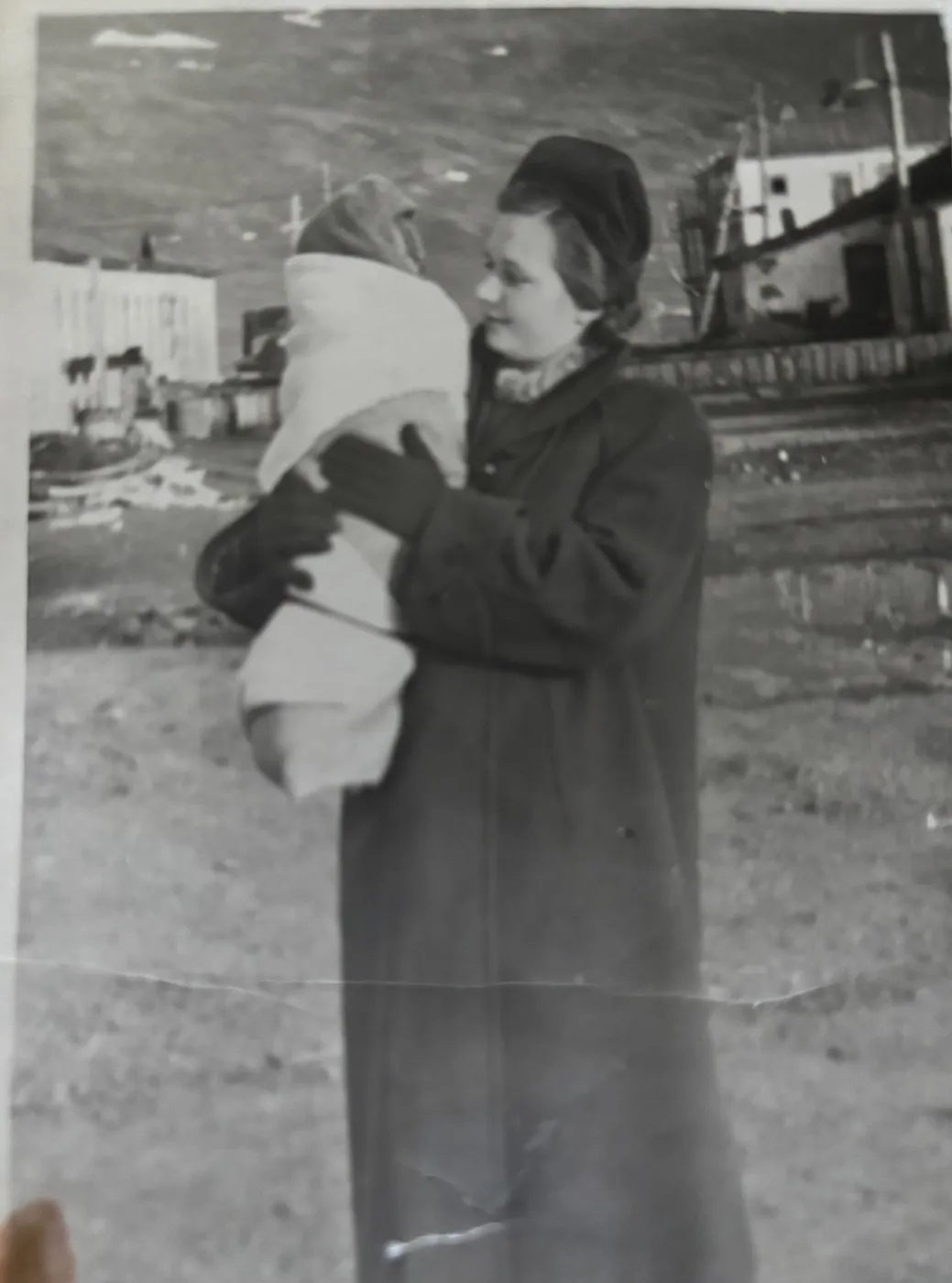
It was November 1956; a blizzard was blowing. Yulechka and I spent the night on the floor of the settlement post-office, and beyond began our new place of work. Soon there was a change: the head of the enterprise left on a seven-month leave “to the mainland,” and I moved into his apartment in the house of the leadership, heated with coal. I took charge of the diesel electric station, this was my whole household. If it stopped, the boiler-house would freeze, along with the kindergarten, the shop, the bathhouse, the club, and so on. Winter ends at the end of May, and already at the beginning of September the cruel frost strikes. The polar night runs from November through February; and in June–August there is polar day, the sun does not set, and it is light around the clock. To sleep at all, we hung cloths over the windows.
The whole leading and engineering-technical personnel were free hired workers, while the laborers were all ZK85 ZK (“zek”) Soviet slang for a Gulag prisoner, from the abbreviation z/k (zaklyuchyonny, “the incarcerated”). The author works alongside ZK laborers at Valkumei, among them the electrician Sidorov, serving “twenty-five years for two murders,” whom the guards will not let step outside the camp zone without an armed escort and a dog. Note 85 · all notes . Alongside the residential settlement was the camp where they dwelt. The regime was “lightened”, they lived in the camp but went to work unescorted, received cash wages, could buy goods in the shop and eat in the canteen. From the hills the streams began to flow toward the summer season, which lasted about 100 days and began around the start of June. In this period we had to extract 200 tons of tin. It lay in the form of black crystals, that is, cassiterite111 Cassiterite Tin dioxide (SnO₂), the principal ore of tin. It was the reason for the Valkumei mine and much of the Chaun-Chukotka mining district, strategic metal extracted in the Arctic largely by forced labor. Note 111 · all notes (SnO₂), tin ore. In winter the overburden was opened up with explosives: the tin-bearing layer was blasted, then driven by our powerful C-80 bulldozers to the corresponding bunker, built onto a trestle where a wooden portal was mounted. From there the rock was crushed and washed by powerful jets of water in the enriching complex; the waste rock went off to the heap (terrikon), while the tin ore with sand went on for further processing, the pebbles and sand into the sluice, and the final product went to the ore-store, where it was brought up to standard and loaded into metal 200-liter barrels, which were sent by sea to the mainland, to the metallurgical plants that smelted pure tin from the ore.
For all this household to function, I and my service had, over the winter, to give major and medium overhauls to the asynchronous electric motors of various capacities and then mount them on the units; to overhaul and mount more than 50 transformers of various substations; to build many kilometers of high- and low-voltage networks; to lay a large quantity of cable lines; and to set up the systems of remote control and monitoring, and of automation and protection. It was significant work, for this was the sole source of energy. In short, there was no time to be bored. The equipment of the diesel electric station had to work round the clock without interruption, especially in the period of summer extraction. The plan was law: if it was not fulfilled, there were no bonuses, and we earned 10–12 thousand rubles a month, so it was not worth losing that.
Everything was subordinated to the extraction season, the season was the “holy of holies.” In that period there must not be any breakdowns or any downtime at the mine. Practically, life at the mine consisted of two stages: preparation and washing. Before the washing it was necessary to overhaul all the power transformers, of which there were 9, held in conservation. Usually the oil was drained into barrels, delivered to the electric shop, tested, run through the drying-oven and the centrifuge, and brought up to standard; then it was poured back into the transformers. The transformer oil was subject to cleaning and drying, and the work with the transformer barrels was labor-intensive, tedious, but necessary. One large transformer of 1000 kVA supplied the work of the central pump station.
Related: the contents · the glossary · the family record · the etymology of the family's names.