The Memoir · chapter 7 of 42
My Birth and Childhood
I was born on April 21, 1931, in Odessa . My father was head of the Central district police department; my mother was a wife, a homemaker, wives then, as a rule, did not work. They named me Viulen56 Viulen An invented name formed from the initials of Vladimir Ilyich Ulyanov, Lenin, as the author explains. In the early Soviet years it was fashionable to coin such revolutionary names from slogans and leaders’ initials. He later went by Vova/Vladimir, the name used elsewhere in this memoir. Note 56 · all notes (Vladimir Ilyich Ulyanov-Lenin). In those days it was fashionable to give children revolutionary names. Father was transferred from place to place, and we moved after him. Of early childhood, memory preserves only fragments: railway stations and train cars.
In 1934, when the Ukrainian government moved to Kyiv , father and the family also moved to Kyiv and received an apartment on Andreevsky Spusk57 Andreevsky Spusk One of Kyiv’s oldest and most prestigious streets (the Andriyivskyy Descent). When most Soviet families shared crowded communal apartments, to be given a private apartment here was a real mark of rank and privilege. Note 57 · all notes , house no. 20. Later we learned that across the street, in a small two-story house, the famous writer Bulgakov58 Bulgakov, Mikhail (1891–1940) A major Russian writer, author of The Master and Margarita and The White Guard. He grew up in the house on Andriyivskyy Descent that the author mentions; it is now the Bulgakov museum, a well-known Kyiv landmark. Note 58 · all notes had lived; now it is his museum.
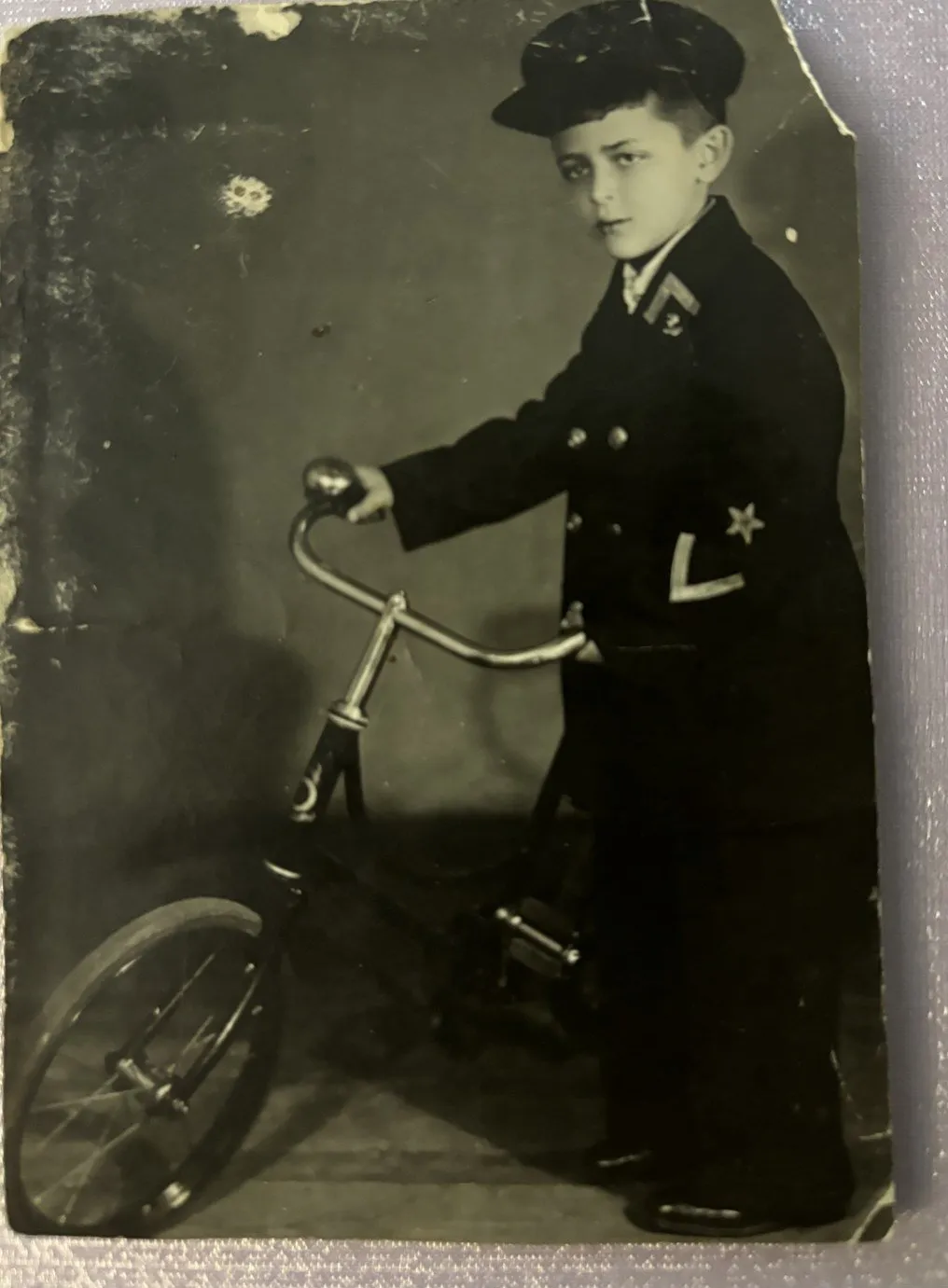
I grew up a pampered and coddled mama’s boy. We had a nanny who was constantly at my side. Mama watched over me closely, dressed me beautifully. We lived well, comfortably. Every year we traveled with father to resorts in Sochi42 Sochi (and the “voucher”) A resort city on the Black Sea coast, long the favored place for officials and the privileged to be sent for rest and medical treatment at state expense. A “voucher” (putyovka) was an official allocation of such a stay, here, part of restoring Yakov to good standing after he survived the Terror. Note 42 · all notes , Kislovodsk , Zheleznovodsk . For several years we went to a dacha59 Dacha A seasonal country cottage outside the city, the traditional Russian and Soviet retreat for summers in the countryside. Access to one, even a rented one, was a comfort tied to a family’s standing. Note 59 · all notes in Letki (30 km from Kyiv) on the Desna River. Of those trips I keep the best memories. The dacha was rented for the season (2–3 months). Father came to us every Sunday. The wonderful sandy beaches with willows, the swimming and the boating, cut into my memory. Father came not alone but brought friends, and they organized picnics with campfires, songs, dances, and so on. In father’s company came the well-known playwright A. Korniychuk, who skillfully grilled shashlik over the fire.
In 1939 my brother Felix was born. I was a big boy (8–9 years old) and remember well the talk of the approaching war. One of the guests, with a rhombus in his collar tab, told a joke: “Hitler asks Stalin the reason for concentrating troops on the western border. Stalin answers that after maneuvers they got tired and are being kept in a more favorable climatic area for rest. In turn Stalin asks Hitler the same question, and he answers that he is concentrating troops on the borders with the USSR in order to ensure a safe rest for the Red Army.”
There was also this joke: “A customer comes into one of the Moscow shops and asks for Dutch cheese. The salesman answers that there is no such cheese anymore, because Holland is occupied. Next he asks in turn for Polish sausage, a French roll, and Greek sauce. And each time he gets a negative answer with a reference to the occupation of the corresponding country. Then he says: ‘Give me at least something to eat.’ They tell him: ‘Take English salt quickly, and soon there won’t be any of that either.’”
All these little jokes and conversations were carried on in the hope that this cup would pass us by, but, alas, the calamity was inexorably drawing near.
Related: the contents · the glossary · the family record · the etymology of the family's names.